lethargic_man: (beardy)

Last summer, I was thinking about where we could go as a day trip from London whilst we were visiting the UK, and hit upon the idea of Canterbury, as a city I'd not yet visited. Of course, Canterbury is steeped in history, with the cathedral, and its associations with the murder of Thomas à Becket, and Chaucer's Canterbury Tales and so forth, but for me a good half the reason to go was the desire to recreate the cover of one of my favourite albums, Blind Dog at St Dunstans by Caravan:

View album cover )

This is one of the cases where reduction in album cover sizes, from 12" LPs to 12cm CDs to tiny thumbnails for MP3s is a real loss; the cover is packed with dog-related jokes most of which you can't see except on a high resolution image. Have a zoom in and see how many you can make out.

Caravan, in case you've never heard of them, were a prog-rock band, part of the so-called Canterbury scene, in the 1970s. (The liner notes on a best of Caravan album describes them as "a break-up product of the Wilde Flowers, one of the most influential bands never to sign a record contract", which phraseology I like.) This album was where they abandoned their prog-rock roots and went poppier, which didn't go down well with fans at the time, but if, like me, you discovered this album (over thirty years ago, good grief!) before their earlier prog-rock material, then you can appreciate the album on its own merits, free from any prior expectations. A few readers might even have heard it without realising: The entire album was part of my playlist at my fortieth birthday party. Here's a playlist for the entire album on YouTube, if you'd like to listen.

Anyhow, I achieved my ambition when I went to Canterbury:

View album cover remake )

(The camera angle is slightly different because (a) I couldn't stand in the middle of the road, and (b) I was covering up some unsightly roadworks with the position of my body.)

lethargic_man: (Berlin)
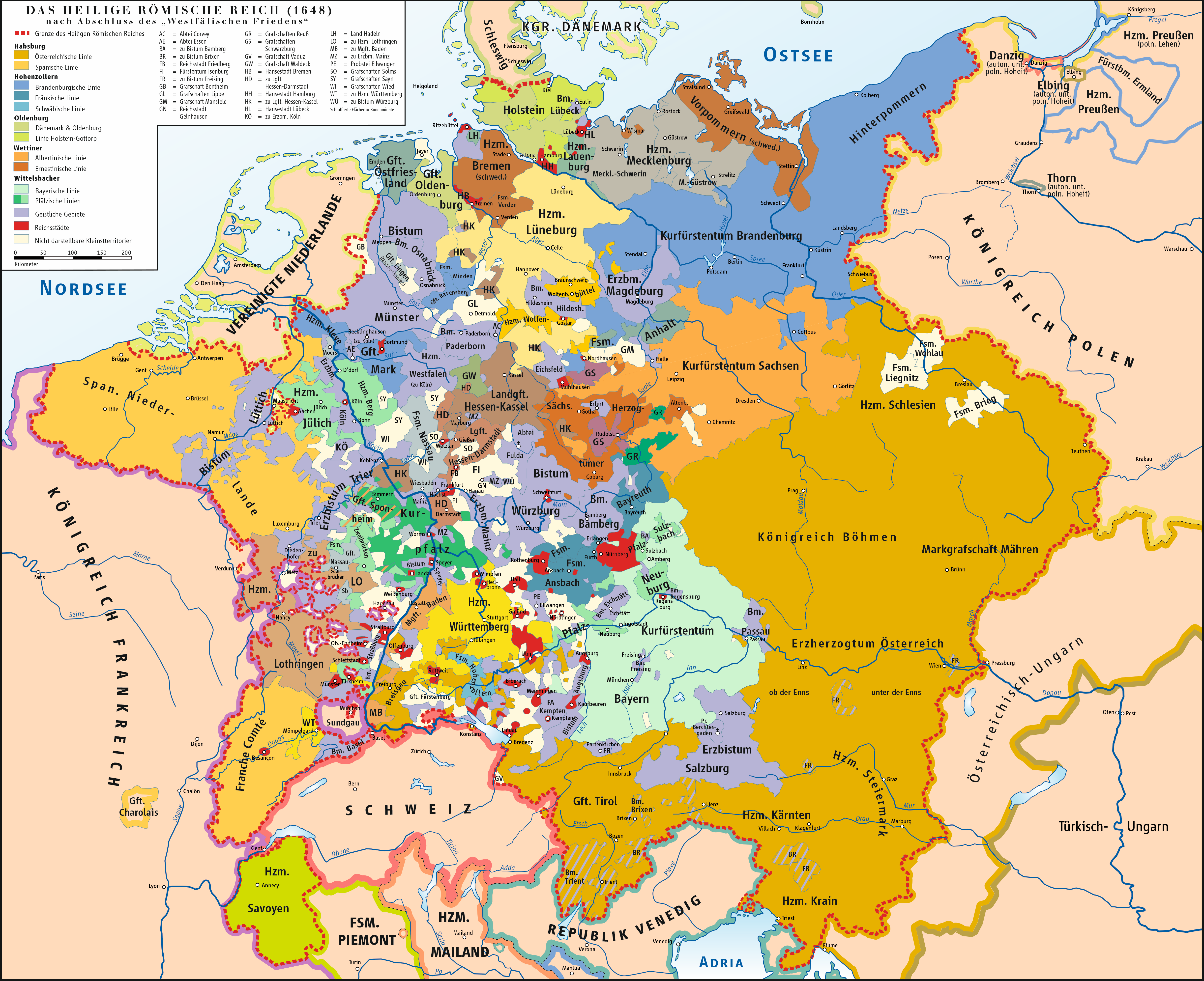
Random trivia discovered by looking up a term on Wikipedia: During the Ice Ages, the glaciers advanced southwards across Europe, but the further one went south, the higher up the land was, so the meltwater from the end of the glaciers couldn't flow south, and couldn't flow north (because the glaciers were in the way), so ended up carving out valleys running roughly east-west, called Urstromtäler (a German loanword into English). One of these ran from Warsaw to Berlin and beyond.

Because of their low situation, and the high water table, they frequently became boggy in the post-glacial world, which posed obstacles to movement in the Middle Ages. As a result, trade routes converged on points where the valley could be crossed comparatively easily, at which points settlements arose.

And this is how Berlin came to be founded where it is—you can clearly see the constriction in the Urstromtal at Berlin in the map on the Wikipedia page. (The edge of the Urstromtal to the northeast is also clearly (to me) the location of the really hard incline on my way back from the Polish border a year ago.)
lethargic_man: "Happy the person that finds wisdom, and the person that gets understanding."—Prov. 3:13. Icon by Tamara Rigg (limmud)

I wrote before about how one of the strengths of Rabbi Ludwig Philippson, in his 1844 commentary on the Torah, is his ability to pull patterns out of what look like random things in the text. I said I wanted to translate two examples, but this turned out to be a much larger undertaking than I expected. In the end, I decided to feed the text into a translation engine, but this also involved a large expenditure of time, correcting the things the translation engine (or the OCRing of the original text) got wrong.

This is actually the second text I wished to translate. (The first might not necessarily be longer, but it's buried somewhere inside the long Schlussbetrachtung zum ersten Buche Moscheh, and I'd need to at least skim translate that to find it.) In this passage, Philippson considers in turn the meanings of the names of the Mishkan, its component spaces, its dimensions, the materials it was constructed from and its colours, before bringing all of this together into a summary of the deeper meaning of the Mishkan, the like of which I have never read.

I'd originally intended to write here: This is a long text; so I suggest that rather than reading it online, you print it out and read during the long drawn-out parts of the High Holydays services. But then life got in the way and I'm only finishing it now. So I suggest instead you print it out and read it during the long dark autumn or winter Friday nights. (Hah, who am I kidding that anyone's going to read a text this long? I suspect I'm translating this mostly for my own benefit to be able to reread easily and fast in the future.) If you do print it out, note that the page with the Tetragrammaton needs to be disposed of in due course in a geniza.

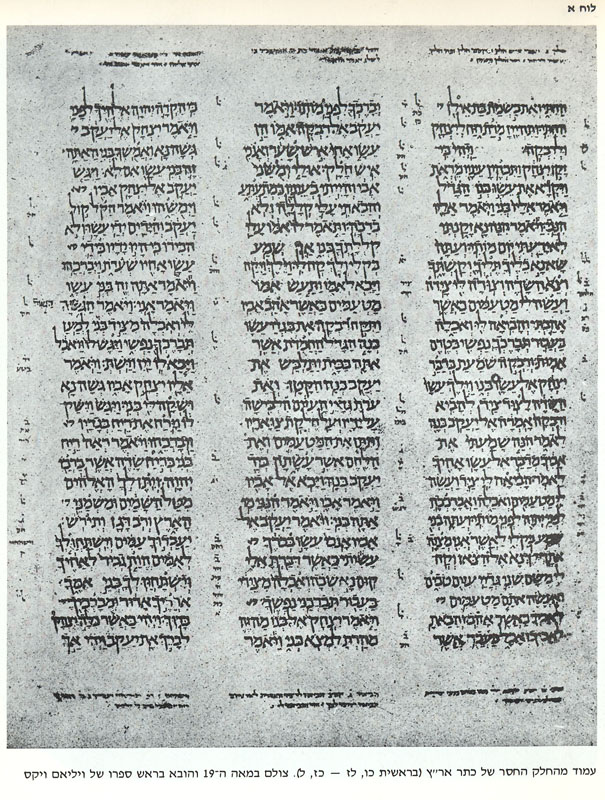
Two comments up front: Firstly, the translation below doesn’t capture one aspect of the original text, which is that it looks like this: in blackletter, with long S’s, and with abſolutely no paragraphing (apart from daſhes to introduce new ſections).

View page scan )

The other is to raise the issue one word that Philippson makes copious use of, but which I’ve had difficulty translating. That word is Vermittelung. Vermitteln means to impart or mediate, but Philippson uses it to describe the connection between God and Man. I’ve translated it as “intermediation”, or “connexion” (using this spelling for a nineteenth-century feel); I don’t feel this really does the job well, but I can’t think of anything better. (Where you see "connection" spelled with CT, this is not a continuity error, but rather rendering the more unambigous word Verbindung.)

(If you're reading this on a smartphone, now would be a sensible time to start viewing in landscape orientation.)

Read all about it! )
lethargic_man: (Default)

A little while ago, I read the book Germania by Simon Winder. I was struck by the contrast between England, where one can trace a single thread of history over a thousand years back to Æthelstan, and Germany, which for most of its history consisted of numerous small countries (nominally under the authority of the Holy Roman Empire), and where both the geography and the threads of its history were an all bar untraceable fractal mess, with names looming out of the morass then fading back into it.

Then I read the book Unruly, about the kings and queens of England, and saw how prior to Æthelstan, the same was pretty much true of England. It occurred to me that the British monarchy could be compared to a river system: Downstream it consists of a single wide channel with the occasional tributary flowing into it, but near its headwaters there are a large number of small streams, and no clear indication of which of them is the most important, or the longest.

So I decided to see if I could make a visual representation of this for the monarchs of Great Britain (I decided to leave Ireland out, as it's complicated enough as it is), and here is the result (click through for a zoomable PDF):

View piccy )

  • This shows the principal kingdoms only: client kingdoms are omitted (so no Kingdom of Fife, for example). (This also gives me a nice historical cut-off; nothing goes further back than Coel Hen (Old King Cole), since his antecedents were under Roman overlordship.) Even so, there's a lot more kingdoms than I had realised, and a few not represented because none of the names of their kings have come down to us, though I did include Dunoting in this category to show how the Kingdom of Northern Britain kept splitting again and again in the immediate post-Roman period.
  • Some of the earliest kings were legendary and may not have existed. I tried to stay clear of out-and-out myth, though, which is why you won't see King Arthur (though you will see Vortigern).
  • I started trying to give names in their original form, but gave up once I realised (for example) I no way had the ability to restore the names of the kings of the Old North from the Welsh forms their names have been transmitted in.
  • Arrows with closed heads lead from the last king of a kingdom to the king who took over rule of that kingdom, whether by forcible or peaceful means. (The single arrow with an open head was because there wasn't enough space to indicate how East Anglia was at times ruled by kings of Mercia and also show its kings down to the last.)
  • Names in bold are the historically more important kings you might have heard of.
  • I had no idea before I started it what a mess Wales (and to a lesser extent the Old North) would turn out to be. Rather than lines of small kingdoms flowing together to form larger ones, as elsewhere in this sceptred isle, kings would divide their kingdoms amongst their children, but you'd also end up with kings reigning multiple kingdoms (which is why Hywel Dda in particular appears multiple times). I had no idea that Wales only reached the state of a unified principality (apart from briefly once or twice beforehand) with its very last king prince, Llywelyn.
  • It's well known that when Henry I tried to ensure that his daughter Matilda would succeed him, her cousin Stephen, with the backing of many of the country's barons, rose against her and England was engulfed in an extremely bloody civil war (known as the Anarchy) for decades. What I only discovered through making this chart was that there had been a successful queen regnant in England before: Seaxburh of the Gewisse (the earliest name of the West Saxons, whose kingdom, Wessex, would eventually come to unify England).
  • Tolkien fans might like to amuse themselves searching for the following names on the chart: Meriadoc, Madoc, Caradoc (and various variants of it), and Ælfwine.
  • I was taught that as the kingdoms of the Angles and the Saxons grew, they displaced the native British kingdoms until they were eventually confined to the north (Scotland) and west (Wales and Cornwall). Since the 1980s, genetic evidence has shown that the picture for much of England is less of displacement rather than absorption. But I was surprised to discover that the first king of the Gewisse (= Wessex), Cerdic, had a Brythonic name (another variant on Caratacos/Caradog), as did one or two of his descendants (Cædwalla). Could the West Saxons have originally been led by a Briton?
lethargic_man: (beardy)

Flavius Josephus recounts an incident concerning the Hasmonean king Alexander Yannai:

As to Alexander, his own people were seditious against him; for at a festival which was then celebrated, when he stood upon the altar, and was going to sacrifice, the nation rose upon him, and pelted him with citrons [which they then had in their hands, because] the law of the Jews required that at the feast of tabernacles every one should have branches of the palm tree and citron tree.

A similar story is told in the Mishna (Succah 4:9), in which the priest carrying out the water libation poured the water of his feet instead of into the correct bowl (according to Rashi, he was a Sadducee and rejected the Pharisaic procedure), and got pelted with esrogs. ISTR that ArtScroll commentators argue that the both are accounts of the same incident (which makes a pleasant change from ArtScroll's normal ahistorical attitude).

Anyhow, I found this image so striking (and also farcical, if you don't think about what happened next) that I was surprised there wasn't a Renaissance-era painting depicting it. So (after waiting thirteen years for the technology to become available), I got ChatGPT to remedy this:

View image )

lethargic_man: (Default)

Some years ago, my father and I watched together the film The Man in the White Suit (starring not-yet-Sir Alec Guinness). At the end he asked me what I thought of it, and I replied it was a bit silly. (This comes, though, with the territory of being an Ealing comedy.) The film grew on me on reflecting on it, though, and kept returning to me in thought, until eventually I got it on DVD and watched it again.

My verdict is that behind the silliness lies a thoughtful exploration of the debate about the adoption of new technologies (in the case of the film, a fabric which never wears out, and cannot get dirty), and the effect of such new technologies on society, and on the lives of those whose livelihoods will be destroyed by them. It's a timeless debate; it applied when the Luddites were smashing weaving frames; it applied when (as I once read though cannot now find evidence for it) New York dock workers' resistance to the advent of shipping containers, which would take away most of their work, led to the first container port being established instead in New Jersey; and it applies now in the debate about computers (and, increasingly, AI) taking away people's jobs.

I can't think of another film that tackles this issue like this; and because the film seems to be somewhat forgotten nowadays, thought I would try and raise its profile by writing this review, and recommending it highly.

lethargic_man: (capel)

Long-term readers may have noted a theme running through my Judaism-related posts, which is my reading ancient texts scouring them for clues as to how much ancient practice of the Oral Torah, which rabbinical propaganda portrays as going back to Moses at Sinai, actually antedated rabbinical Judaism (which arose from Pharisaic Judaism having to reinvent itself following the destruction of the Temple in the year 70, to recentre Judaism upon the home and the synagogue).

Well, I won't be blogging about this any more: I've just read a book that has given me all the answers (along with the sources for them, of which by this point, a surprising number are already on my bookshelf): The Origins of Judaism: An Archaeological-Historical Reappraisal, by Yonatan Adler. The author's thesis is to sidestep the question of when the Torah was written, and instead look into when the literary and archaeological evidence indicates that people were actually keeping the commandments of the Torah.

Read more... )

Jewish learning notes index

lethargic_man: (Default)

I dug out something the other day from an email from 1998; my conversation partner was impressed my email archive went back that far. I said it goes back to 1993, but anything before 1997 I only have in hardcopy (stop laughing!). After that, I went searching for my very first email, and here it is.

Back in 1992, I applied for an account on my university' mainframe. I was the very last year to have to apply for one; from the following year, all new students would automatically get an email account on the mainframe's replacement system. For the next year, I contented myself with sending messages to my fellow students using the internal messaging system; it wasn't until the start of the '93–'94 academic year that I tried sending an email through the Internet (or exploring what else I could do, which is how I discovered Usenet).

Here's a printout of that email, along with the reply I got, which gives the date: Monday 11 October 1993. Worth noting are the big-endian email addresses, something that hasn't been seen for decades now, and the fact that when I sent it, I wasn't even sure what my own email address was! Don't ask why I had set my name in the "From" field to "Fortescue Siegfried" (and then managed to misspell it *cringe*).

View email )

Rafi's beliefs

Sunday, November 17th, 2024 06:41 pm
lethargic_man: (capel)
Not sure how I have managed to raise my six-year-old such that he has doubts about the existence of God and the angels,* but remains firm in his conviction of the existence of the Tooth Fairy and that his grandfather and myself can work magic.

* In that he independently came up with something very close to Pascal's Wager: "I hope God exists, because otherwise we're wasting an awful lot of time davening."

† Despite the doubtless forgotten time a year ago I told him I'd used a ferry to cross the river on a bike ride, and he replied, "But ferries don't exist!"
lethargic_man: "Happy the person that finds wisdom, and the person that gets understanding."—Prov. 3:13. Icon by Tamara Rigg (limmud)

After years of reading my way through first the Hertz and Cohen chumash commentaries every year, then (from 2004) that in the Etz Chayim, I got bored and started seeking out new commentaries to read during the yearly Torah reading cycle, which was easy when the minyan I davened with, Assif, mostly met in my shul's library. After reading a few from traditional authors, who I can't now really remember (Nachmanides was one, I think), I diversified, and read (and blogged) my way through the Samaritan version of the Torah, in an edition with the differences from the Masoretic Text highlighted.

After moving to Germany, I read my way through R. Ludwig Philippson's 1844 translation of the Torah for the 2016–2017 Torah reading cycle, then spent the following six and a half years reading his commentary. (This was the first complete book I ever read in German; that's why it took me so long.)

Having finished that, my new project is the Biblia Hebraica Stuttgartensia, which contains the text of the Leningrad Codex with footnotes (in Latin (!)) giving variant readings in all known manuscript traditions, including Latin and Greek ones, for which the Hebrew is sometimes* reconstructed.

* But, annoyingly, for someone with no Greek beyond the mere ability to read the letters) not always.

So far I've only got as far as פַּרְשַׁת לֶךְ־לְךָ, but a few things are already beginning to emerge:

There have been few differences from the MT thus far which I have not already seen in the Samaritan text. As an example, in place of the MT's "God drove out the human, and placed to the east of the garden of Eden the cherubim with a flaming sword &c" the Septuagint has "God drove out the human, and placed him at the east of the garden of Eden, and the cherubim with a flaming sword &c". The ages of the generations between Adam and Abraham also vary from the MT.

The Masoretic Text is often thought of as being monolithic; the reality is that it too has minor variations between manuscripts. Having spotted a few places in Gen. 14 where a דָגֵשׁ was missing in some manuscripts, for example in the שׂ of עֵמֶק הַשִּׂדִּים in verse 10, also כְּדָרְלָעֹמֶר being two words (joined with a מַקַף) in one place, I was intrigued to see whether other chumashim reflected this. I found the Etz Chayim did; a little investigation reveals it uses the Leningrad Codex as the basis of its Hebrew text. Intriguingly, Wikipedia reveals that Hebrew Bibles frequently use the (reconstructed, where necessary) Aleppo Codex as their basis in preference to the Leningrad Codex.

Both the Hertz chumash and Philippson do not, however, have the דָגֵשִׁים missing, nor the word break in כְּדָרְלָעֹמֶר. The latter turns out to use the Hebrew text of Meir Halevi Letteris, the former that of the British and Foreign Bible Society, which turns out to be based on Letteris' text. (The first edition of Philippson precedes Letteris' text by several years; it's not clear to me where Philippson got his Hebrew text from.)

I look forward to seeing in a few weeks if there's any difference between the two codices for one of the few early pages from the Aleppo Codex which has been photographed.

lethargic_man: (bike)

At the end of my coast-to-coast cycle ride in the UK eleven years ago, my parents met me at Tynemouth, and my father offered to give me a lift home. I considered declining, as I had just done 92½ miles, and if I cycled back to their place, I'd achieve my first century (to use the cricketing term). But then I considered that it would be uphill, which I would be finding very difficult by then, and would involve cycling in the countryside without street lights as night fell, so chose to accept the lift.

I went on to spend the next ten years regretting this choice. Last year, it occurred to me I ought to do something about it, as I wouldn't be physically capable of such a long ride indefinitely, as I grow older—something that would be borne out when foolishly pressing on despite knee pain during a sixty-mile ride earlier this year crippled my left knee for a whole two months, and during the course of trying to find out why it was taking so long to heal, I discovered I have arthritis. However, in the end, I decided to give it a go, with the expectation that I might have to abort the ride and take the train back if my knee wasn't up to it (which is why I made no mention of it here or Facebook in advance).

For this ride, I chose to cycle from my home in Berlin to (the closest point in) Poland and back. The border is (since Stalin moved Poland one hundred miles west in 1945) the river Oder:

View photo )

I did it!

View photo )

You can tell I'm in Poland, can't you? (If it's not obvious, every single sign here is in German, not Polish, and the building has the name Oder Center Berlin.)

View photo )

Actually, the real clue is the shop selling fireworks. Berlin on New Year's Eve is like a war zone; in an attempt to do something about this, the authorities only permit fireworks to be sold for the three days immediately beforehand (and if the shops sell out, tough). The response of Berliners to this is to nip across the border and stock up on fireworks. The response of the Poles is clearly to sense a market opportunity.

Because this was a little short of fifty miles from home, I continued on a bit, passing through the village of Stary Kostrzynek (Alt-Küstrinchen in German), which allowed me to see somewhere more Polish than this faux Germany. It had some half-timbered houses, but also looked rather run-down.

Factlet I wouldn't have discovered had I not entered Poland this way: In Poland it is legally compulsory for cars (and, presumably, bikes) to have their lights on at all times.

Poland's westernmost point:

View photo )

A reminder that this is a Catholic country:

View photo )

Federal Republic of Germany 1 km:

View photo )

Back to Germany:

View photo )

Meanwhile, back in Germany, this monument marks the place where His Majesty King Friedrich Wilhelm IV of Prussia had breakfast whilst out hunting on 23 January 1841. I'd boggle and say who the hell cares, but clearly people did. The communists, however, didn't, and uprooted the stone, breaking it into two pieces. After the fall of communism, it was reinstalled.

View photo )

Total bike ride length: 100 miles (160 km) plus loose change; duration: twelve and a half hours. Streetlights in the capital regained before it got dark, and though the ascent west from Bad Freienwalde made both my knees hurt, they didn't get any worse during the rest of the ride, and are already mostly recovered.

lethargic_man: "Happy the person that finds wisdom, and the person that gets understanding."—Prov. 3:13. Icon by Tamara Rigg (limmud)

I've posted before about Rabbi Ludwig Philippson's 1844 commentary on the Torah, which I have been reading my way through since Simchas Torah in 2017, and am now nearly finished.

One of the things I didn't mention in my previous post is his ability to find patterns in what seems an arbitrary sequence. I've been meaning for a while to translate and post two extended essays of his on these lines, one pulling an overarching Divine plan out of the entire historical sequence from the beginning of the Torah up to the revelation at Sinai, and another finding meaning and pattern out of the design of the portable Tabernacle, but these are going to take a huge amount of effort and time which I don't really have, so I've been displacing from them for a long time.

However, I recently came across a much shorter example, so I would like to post it now. It's from Moses' farewell blessing in Deuteronomy 33, specifically his blessing of the tribe of Levi. The Torah text reads:

Read more... )

Tea-shirt

Thursday, March 28th, 2024 11:42 pm
lethargic_man: (beardy)

Barely was the ink dry on my last item of self-designed clothing, when inspiration came for a new one:

View piccy )

The text reads, in German, "Never get between an Englishman and his tea"; the back reads, also in German, "Well, someone has to lend credence to the stereotype".

A dozen years ago, I was returning home from shul on a Friday night in Berlin whilst wearing this outfit plus straw panama, and I overheard a drunk German point out rather too loudly to his companion, „Engländer!“ I thought to myself, if it's that obvious, I'm going to continue dialling it up to eleven.

In furtherance of the same aim, I depicted my tea-drinking self on the tea-shirt wearing a tail-coat, top hat and white bowtie, with a wood-panelled drawing-room in the background. Unfortunately, it's not very easy to see this detail on the photo, unless you click through for a higher-definition image. Indeed, the photo is a bit dark, which was the result of my trying to make the background not steal the limelight, whilst marrying light levels in the foreground and background, which were obviously not shot at the same time. (The latter is in my grandfather's house, which he moved out of in 1981. He had wood panelling installed, including a panel which swung open to reveal a cocktail bar; how cool is that?)

Äh?

Tuesday, February 6th, 2024 11:03 pm
lethargic_man: The awful German language (Mark Twain's words, not mine) (Die schreckliche deutsche Sprache)
From time to time, I come across English words being adopted into German with the A rendered as an Ä, for example Känguru. I don't get it. As I understand it, short A in English represents the sound /æ/, which sounds, to me at least, far closer to the German A (/a/) than Ä which, as a short vowel, represents /ɛ/, the sound in English "bed". (/a/ is apparently the first half of the diphthong in English "ice".)

I'd put this down to Germans having a tin ear for the subtleties of English vowels (in much the same way I do the other way around) until Sunday, when Rafi, who has a good grasp of the sounds of both languages (but, as the remainder of this sentence will show, a poorer one of German orthography, which is fair enough given that he hasn't started school yet), announced he was going to write "Daddy" with German spelling, and wrote "DÄDI" in pavement chalk.

Can anyone unriddle this mystery for me?
lethargic_man: (capel)

At my company's hack week in Cologne last summer, I saw someone wearing a T-shirt with runes on it. Cool, I thought, and briefly considered the possibility of wearing one myself before concluding it would not be reflective of my culture: none of my ancestors were rune-carving Germanics fifteen hundred years ago.

This led to a contemplation of what the equivalent would be for me. The Palaeo-Hebrew alphabet,* I concluded, and posted about it on Facebook, concluding "I can feel a T-shirt coming on."

* The alphabet the Jews used before the Babylonian exile, where they picked up the Assyrian one they still use today.

Several months down the line, here's the result:

Read more... )

Now roll on my next T-shirt, for which I already have the idea...

Boar

Sunday, March 12th, 2023 06:58 pm
lethargic_man: (Berlin)
Today I achieved a longstanding ambition: After three years of cycling around Berlin's urban forests, I finally got to see a wild boar. It was running very fast, perpendicular to my path. It had almost reached its closest point before I realised it wasn't a large dog, and unfortunately it was going so fast that I didn't have a chance of getting my 'phone out and camera ready before it dwindled to a dot in the distance.

Well, I can tick that off my list of things to achieve before I turn fifty, just as soon as I retroactively add it. 🙂
lethargic_man: (Default)

A few years ago there was a big hoo-har when the then (just) Duchess of Cambridge was pregnant with her first child, to get all the Commonwealth countries to agree to change their law so that if that child turned out to be a girl, she wouldn't be disinherited of the throne in the event of the later arrival of a brother.

A propos of very little, I found myself wondering recently how often the principle of male primogeniture had actually disinherited the heir to the throne. The answer turned out to be less often than one might think:

Most famously, the governments of England and Scotland put up with James II and VI converting to Catholicism because the throne would be inherited by his daughter Protestant Mary, but when James had a son, the prospect raised itself of a Catholic succession, which led to the English Parliament inviting Mary's husband William of Orange in the Glorious Revolution of 1684 to invade the country and kick James out. (This is where the term "revolution" in the political sense comes from.)

And, a century beforehand, both Mary and Elizabeth Tudor were skipped over in favour of their younger brother Edward VI, though his death without issue resulted in both of them becoming Queen regnant in due course.

Aside from that, in reverse chronological order, here are the women who but for the subsequent arrivals of younger brothers might have become Queen in the UK or its predecessor countries:

  • Augusta, daughter of Frederick, Princes of Wales (whose death before that of his father George II meant he never got to be king); skipped over in favour of her brother George III.
  • Elizabeth, daughter of James VI and I; skipped over in favour of her brother Charles I. She married Frederick V, Elector Palatine of the Rhine; her grandson would become George I of Great Britain.
  • Margaret, daughter of Henry VII, skipped over in favour of her brother Henry VIII. She would become Queen consort of Scotland; her great-grandson James VI would become James I of England.

And that, it turns out, is it, or at least as far back as when England was a third-world country of little account on the fringe of the civilised world, at which point my interest in its history fades away (though I am interested in the ninth to twelfth centuries too).

lethargic_man: (linguistics geekery)

Adrienne Ross wrote in response to my last blog post, "At some stage you could look at the Latin based/Romance languages to see how they have developed." My first thought was 'All I've got time for, especially when I'm not as familiar with the Romance languages as the Germanic ones', but then it occurred to me I could probably write something interesting just from what I already know. So here we go.

Read more... )

Common Germanic

Thursday, November 24th, 2022 10:52 pm
lethargic_man: (linguistics geekery)

It won't come as much of a surprise to most of my readership that I am interested in philology. In particular, my engagement with German has prompted me to learn more of where German words came from and their cognates in English. Of course, the two originated as dialects of a common language, dubbed Common Germanic, spoken from about 500 BCE to the fourth century CE*, which was ancestral to all the historical Germanic languages, from Afrikaans to Yiddish.

* Though Old Norse and the East Germanic languages (Gothic, Burgundian, Vandalian) were already splitting off by then.

Philologists talk about languages as evolving to unintelligibility over the course of a millennium, which made me wonder how different Common Germanic must have been to Old English (which is of course unintelligible to non-scholars today). So I headed off to Wikipedia to find out—and here's my findings, essentially boiling down the most interesting bits of what I read into one blog post (which I suspect will mostly be of interest just to me, but now I've got it in a form I can readily refer to in the future).

Read more... )

Profile

lethargic_man: (Default)
Lethargic Man (anag.)

November 2025

S M T W T F S
      1
2345678
9 101112131415
16171819202122
23 24 2526272829
30      

Syndicate

RSS Atom

Most Popular Tags

Style Credit

Expand Cut Tags

No cut tags
Page generated Tuesday, February 3rd, 2026 12:06 pm
Powered by Dreamwidth Studios